Centre of Excellence for Contracting
Dialogue between the public sector and contracting players

Goal: Building expertise in energy-efficient renovation through contracting
Topics: Energy efficiency, Business models, Municipal governments, Redesigning buildings and areas
Runtime: since 2010 (current project)
Our mission: to instil competence
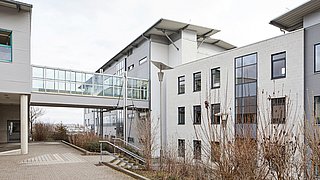
The Centre of Excellence for Contracting supports building owners in implementing energy-efficient, climate-friendly and cost-effective energy supply solutions for buildings in strategic portfolios and neighbourhoods through contracting.
The Centre of Excellence for Contracting aims to provide support throughout all project phases.
The objective is to
- achieve this for many buildings simultaneously, whilst guaranteeing lower energy consumption and greenhouse gas emissions,
- to meet legal obligations and
- to attract private capital to pre-finance the measures.
The Centre of Excellence for Contracting helps to integrate various energy services.
Our approach: networking to promote best practice
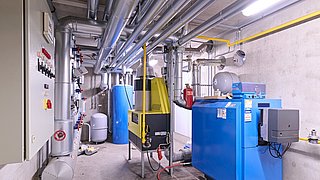
Through its Centre of Excellence for Contracting, dena has provided practical support in initiating and supporting Energy Performance Contracting (EPC) projects. In addition, the Centre of Excellence for Contracting has established a forum for dialogue between users, providers, consultants, the federal government, the Länder and local authorities.
The aim is to disseminate and further develop knowledge on EPC. This involves providing guidance on improving the political and legal framework and building and expanding regional expertise.
The focus is on:
- Further development of standards (guidelines, tools) for the development, tendering, awarding and implementation of contracting projects
- Further development of contracting business models for the implementation of renewable heat supply – including PV and electric vehicle charging points – and for the heat supply of neighbourhoods
- Consultancy services for building owners on the implementation of EPC projects
To create positive EPC examples, dena implemented the pilot project “Co2ntracting: build the future!” on behalf of the Federal Ministry for Economic Affairs and Energy from 2021 to 2025, amongst other initiatives. It paved the way for new EPC projects: by the end of August 2025, over 30 participants nationwide had benefited from free implementation advice provided by dena. The pilot projects are intended to offer guidance, encourage replication and make the lessons learnt available to other local authorities.
Our milestones
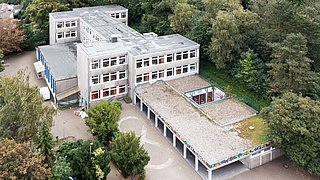
- 2025: Completion of the pilot project ‘Co2ntracting: build the future!’. Contracts covering energy efficiency investments totalling approximately 40 million euros across more than 380,000 m² of heated floor space were initiated (as at June 2026). Of this, almost half of the investments are pre-financed by service providers and refinanced from energy cost savings.
- 2025: Publication of the study “Local authorities as the key implementing body for a successful energy transition”. It analyses conflicting objectives and needs, identifies existing barriers and derives recommendations for action for federal policy. The dena analysis is based on three expert reports.
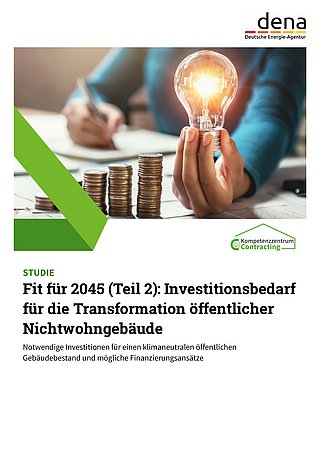
- 2024: Publication of the study ‘Fit for 2045 (Part 2): Investment requirements for the transformation of public non-residential buildings’. For the first time, it quantifies the investment required to achieve a climate-neutral public building stock by 2045 at around 120 billion euros.
- 2024: 4th digital ‘Local Authority Climate Protection Forum’, a forum for local authorities to discuss achieving climate protection targets
- 2024: 10th annual “Federal-State Dialogue on Energy-Saving Contracting”
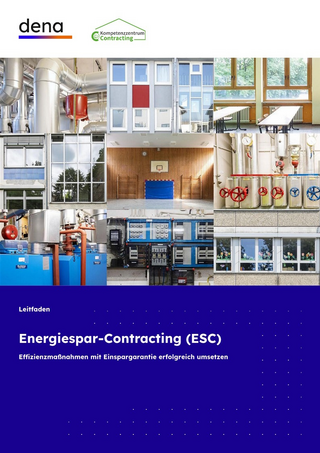
- 2024: Publication of the guide “Energy Performance Contracting (EPC)” with model documents (2nd edition: 2025). It is now regarded as the industry standard.
- 2023: Publication of the study ‘Fit for 2045: Target Parameters for Existing Non-Residential Buildings’. For the first time, it sets out how much energy and how many emissions a non-residential building may still consume following an energy-efficiency refurbishment in order to be considered climate-neutral or greenhouse gas-neutral.