Focus on cyber defence and resilience
Experts from Germany, Ukraine, and Moldova are collaborating in a new framework to secure critical energy infrastructure
On 26 and 27 March 2026, a trilateral conference on Cybersecurity and Resilience for the European energy infrastructure took place in Chișinău, the capital of Moldova.
Cyber Defense and Resilience at the Heart of the Conference
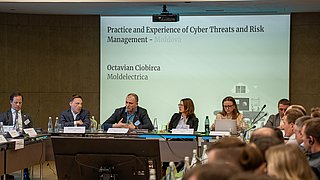
The conference – organised by dena and the German-Ukrainian Energy Partnership – brought together around 70 experts from Moldova, Ukraine and Germany, as well as from EU institutions, in a novel format. The conference focused on discussions regarding the protection of critical energy infrastructure against hybrid and physical attacks.
It is a highly topical issue: just two days before the conference, a Russian attack on the Isaccea-Vulcănești cross-border power transmission line led to power cuts in Chișinău. The line connects the energy systems of Moldova and Romania and runs partly through Ukraine. Over the past few months of the war, there have been repeated Russian attacks on energy infrastructure within Ukraine – some of which have had cross-border implications.
As this example shows, cyber security, hybrid threats and physical attacks on energy systems have become key challenges in an increasingly interconnected energy landscape. Moldova and Ukraine lie at the heart of one of Europe’s most critical energy routes. The stability of their energy systems safeguards the supply routes for the entire region.
Any major disruption in the energy sector – be it a cyberattack, a physical attack or an act of sabotage – can trigger a chain reaction extending far beyond national borders
Germany’s Energy Partnerships Strengthen Dialogue and Resilience
This conference was redesigned and organised by dena as part of the energy partnerships on behalf of the Federal Ministry for Economic Affairs and Energy (BMWE). The energy partnerships, which Germany maintains with more than 30 partner countries worldwide, provide a strong platform for trust-based dialogue and the exchange of expertise between governments, industry and civil society – including on the topics of energy security and resilience.
This is how the German-Ukrainian Energy Partnership is helping Ukraine to protect, rebuild and modernise its energy system. Since 2025, the Republic of Moldova has been receiving assistance in better preparing its energy infrastructure for cyberattacks and bringing it into line with EU standards. For Germany, this presents a unique opportunity to learn from the practical experiences of the partner countries and to build a strong and trusting network through which German companies can also contribute their expertise and know-how.
Regional Cooperation Enhances European Energy Security
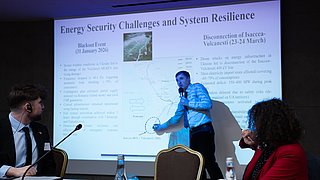
The conference also presented a European perspective. This is because the interconnection of our energy systems has long extended beyond the EU and now also includes the electricity grids of the candidate countries. Since 2022, Ukraine and Moldova have been synchronised with the European Network of Transmission System Operators. This development is closely linked to a changing geopolitical landscape in which energy infrastructure is increasingly becoming a target of hybrid conflicts. The discussions highlighted both the challenges and the opportunities presented by this integration.
A key finding of the conference: the consistent expansion of formal, cross-sectoral channels of communication between countries is essential. Particularly in times of crisis, stable channels of communication are crucial for ensuring a swift, coordinated and effective response.
Furthermore, crisis preparedness should be tailored to the specific situation. In this context, the emotional resilience of employees plays an important role alongside physical security. The insights shared by the Ukrainian participants were particularly valuable for the exchange with Germany and Moldova. The lessons learnt from four years of war have been hard-won and should be carefully analysed and utilised when implementing the EU’s NIS-2 and CER directives.
The conference sends a clear message: a shared political commitment to cooperation, underpinned by trust and mutual support, is crucial.