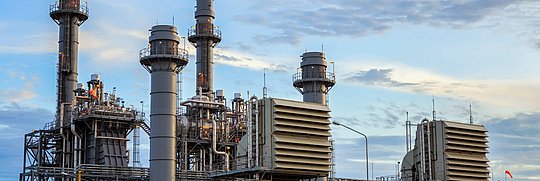
Energy efficiency of the heat supply in Kazakhstan’s industry
dena is supporting the government of Kazakhstan in implementing its modernisation and industrialisation programme in the field of energy-efficient heat supply in industry.
Partner

The challenge
Kazakhstan has placed the reorganisation of its energy system and energy supply at the top of its political agenda in order to exploit its energy-saving potential. In 2010, the government’s national energy strategy set the target of reducing energy consumption by at least 25 per cent by 2020 and by 50 per cent by 2050. The energy consumption of Kazakhstan’s industry is four times greater than in Germany currently. 72.2 per cent of Kazakhstan’s total energy consumption is attributable to industry and 10.3 per cent to the housing and communal services industry.
What we have done:
The project built on the government’s objective of significantly strengthening its communication on energy efficiency in key target groups and developing instruments for implementing energy efficiency measures. In doing so, dena wanted to strengthen the industry’s expertise in the field of energy efficiency by providing informational material and highlighting examples of best practice. To this end, the information and motivation brochure entitled ‘Energy-efficient heat supply in industry and commerce’ was developed and distributed among companies in Kazakhstan. A delegation of representatives from Kazakh institutes and companies travelled to Germany in an effort to support and deepen the dialogue on energy policy and networking with German companies and institutions. In addition, a specialist event on energy-efficient heat supply in industry that took place in Pavlodar at the end of May 2019 served to build up expertise in Kazakh companies by highlighting examples of best practice, enabling energy managers from energy-intensive companies to share their experiences with experts and energy auditors and deepening the network’s structure.
The overall outcome
dena’s activities were intended to enable industrial and commercial companies in Kazakhstan to make the heat supply in their operations more energy-efficient, reduce energy consumption and in turn achieve the goals of the country’s energy strategy.
Let us know if we can help!
-
 Lilia Mass
Leading Expert, Staff unit international cooperation T: +49 30 66 777 - 335 lilia.mass(at)dena.de